Sewing Made Easy: The Needle Threader Solution
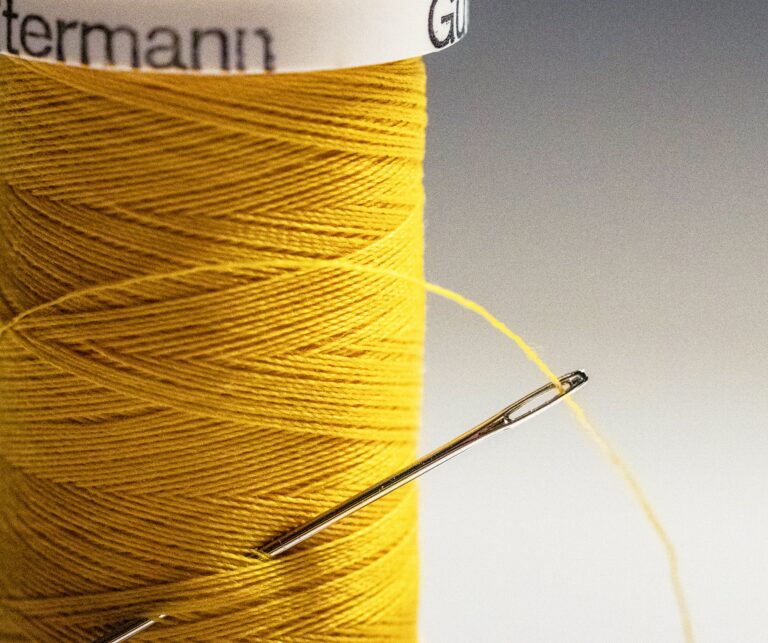
You know the frustration, don’t you? That tiny eye of a needle, the ever-fraying end of your thread, and the growing sense of defeat as you squint, poke, and miss, again and again. For newcomers to the world of sewing, it can be a significant barrier, a hurdle that threatens to turn a potentially enjoyable hobby into an exercise in exasperation. Even for seasoned stitchers, a bad day for eyesight or a particularly stubborn thread can bring the whole process to a standstill. But what if there was a simple, elegant solution? A device so ingenious, so straightforward, that it transforms the most fiddly part of sewing into a flick of the wrist? Enter the needle threader, your new best friend in the fight against threading frustration.
No matter your skill level, the act of threading a needle presents a unique set of challenges. For absolute beginners, it can feel like trying to thread a camel through the eye of a gnat. You’re eager to start your first project, perhaps a simple cushion cover or a quick hem, but before you can even make a single stitch, you’re faced with this seemingly insurmountable obstacle. This initial struggle can be incredibly disheartening, leading many to abandon sewing before they’ve even truly begun.
Why Is Threading So Hard?
Think about it for a moment. You’re dealing with incredibly small components. The eye of a universal sewing machine needle is typically a mere millimetre or two wide, and hand sewing needles can be even finer. Your thread, while strong, is flimsy and prone to bending, fraying, and splitting precisely when you need it to be rigid. Add to this the natural decline in your eyesight that often comes with age, or even just the fatigue of extended sewing sessions, and the task becomes exponentially more difficult.
- Tiny Target, Flimsy Projectile: Your target is minuscule, and your “projectile” lacks the necessary rigidity.
- Eyesight Challenges: Presbyopia, glaucose, or even just eye strain can make focusing on the needle eye a monumental effort.
- Thread Behavior: Fraying ends, static cling, and a general lack of cooperation from your thread are common culprits.
- Lighting Woes: Poor lighting exacerbates all of the above, turning the needle eye into an invisible dot.
The Impact on Your Sewing Journey
The frustration generated by difficult threading isn’t just an minor annoyance; it can have a profound impact on your overall sewing experience. It can steal valuable time from your creative process, transforming minutes of potential stitching into minutes of futile battling. More critically, it can erode your confidence, making you question your ability to even perform the most basic sewing tasks. This erosion of confidence can, in turn, lead to procrastination, reduced enjoyment, and ultimately, a premature abandonment of your sewing ambitions.
A Brief History of Needle Threaders: From Ingenuity to Accessibility
While the modern needle threader might seem like a relatively recent invention, the concept of aiding the threading process has roots much deeper in history. Early forms were often rudimentary, perhaps simple wire loops or cleverly bent pieces of metal, but their purpose was always the same: to make the impossible, possible. As sewing evolved from a necessity to a widespread hobby and industry, the need for more efficient and user-friendly threading tools grew.
Early Innovations and Manual Threaders
Imagine a skilled artisan in days gone by, perhaps frustrated by the same tiny eye you struggle with today. They would have experimented with various materials and methods. The simplest form of a needle threader, still widely available today and often given away with packs of needles, is that small, diamond-shaped piece of metal with a fine wire loop. This basic design, though sometimes fiddly itself, revolutionized manual needle threading for many generations. It was a testament to the ingenuity of solving a common problem with elegant simplicity.
- The Wire Loop Threader: The quintessential manual threader; simple, effective, and incredibly widespread.
- Limitations of Early Designs: Prone to breaking, required a steady hand, and still involved a degree of dexterity.
The Rise of Mechanical and Automatic Solutions
As technology progressed, particularly with the advent of the sewing machine, the demand for more robust and reliable threading solutions increased. Sewing machine manufacturers began incorporating built-in threaders into their designs, recognizing the value this added for their customers. These weren’t just simple loops; they were mechanical marvels, often involving levers, guides, and springs that took the guesswork and the strain out of the threading process. This marked a significant leap forward, moving beyond just aiding the user to actively performing the threading for them, or at least guiding them very precisely.
How a Needle Threader Works: Your Partner in Precision

At its core, a needle threader’s function is beautifully simple: it creates a larger, more manageable target for your thread, circumventing the tiny needle eye entirely. Whether it’s a manual wire loop or an integrated automatic system on your sewing machine, the underlying principle is the same: providing a temporary, oversized pathway for your thread to pass through the needle’s eye, then pulling the actual thread through in its wake.
Manual Threaders: The Wire Loop Wizardry
Let’s dissect the operation of the most common manual threader. You take that small, diamond-shaped tool.
- Insert the Loop: You push the fine wire loop of the threader through the eye of the needle from the front (the side your thread will eventually emerge from). The loop is significantly larger and more visible than the needle eye, making this first step much easier.
- Thread the Loop: Once the wire loop is protruding through the back of the needle, you simply pass your sewing thread through this now-generous loop. Because the loop is so much larger, this is a breeze.
- Pull Through: You then gently pull the entire threader back through the needle eye. As the wire loop retracts, it pulls your sewing thread along with it, leaving a perfect tail of thread effortlessly coming out of the needle’s eye.
- Benefits: Inexpensive, portable, no batteries required.
- Considerations: Wire can bend or break, still requires some hand-eye coordination.
Automatic Threaders: The Sewing Machine’s Secret Weapon
The automatic needle threader found on many modern sewing machines is a marvel of small-scale engineering. While the exact mechanism might vary slightly between brands, the general principle remains consistent. These systems typically involve a series of guides and a tiny hook or pin that aligns perfectly with the needle eye.
- Position the Needle: You first ensure your needle is in the highest position, often via a specific button or by turning the handwheel.
- Engage the Threader: You then engage the threader, usually by pulling down a lever or pushing a button. This action causes a small hook or wire to descend and pass directly through the needle eye.
- Guide the Thread: You then wrap your thread around a designated guide and usually hook it under the tiny hook that has passed through the needle eye.
- Disengage and Threaded: Release the lever, and as the hook retracts, it pulls a loop of your thread through the needle’s eye to the back, ready for you to pull through further.
- Benefits: Extremely fast, consistent, ideal for those with limited dexterity or poor eyesight.
- Considerations: Specific to your machine, may require practice to master the exact sequence of steps.
The Undeniable Benefits: Why You Need a Needle Threader in Your Life

If you’re still on the fence, let me paint a clearer picture of just how transformative this simple tool can be. The benefits extend far beyond just saving a few seconds; they impact your entire sewing experience, making it more enjoyable, less stressful, and ultimately, more productive. You’re not just buying a gadget; you’re investing in your peace of mind and your passion.
Time-Saving and Efficiency Booster
Imagine the cumulative time you’ve spent struggling with a needle. Each frustrated minute adds up. A needle threader eliminates this wasted effort. What used to be a frustrating minute or five turns into a satisfying second or two. This efficiency boost is particularly evident when you’re working on projects that require frequent re-threading, such as hand-sewing intricate details or when a thread breaks mid-stitch.
- Reduced Set-Up Time: Get straight to stitching, no more pre-sewing frustration.
- Seamless Thread Changes: Quickly swap out thread colors without breaking your creative flow.
- Less Rework: Fewer instances of accidentally bending the needle or fraying the thread during manual attempts.
Reducing Frustration and Eye Strain
This is arguably the most significant benefit. The sheer relief of no longer having to squint, poke, and curse at a tiny needle eye is immense. For those with diminishing eyesight, a needle threader isn’t just a convenience; it’s an absolute necessity. It allows you to continue enjoying your hobby without the accompanying headaches and eye strain that inevitably come from extended periods of intense focus on minuscule details.
- Improved Enjoyment: Sewing becomes a joy, not a chore.
- Decreased Stress: Less fumbling means less irritation and more calm in your creative space.
- Preserved Vision: Protect your eyes from unnecessary strain, allowing you to sew for longer.
Enhancing Accessibility and Inclusivity in Sewing
A needle threader is a powerful tool for inclusivity. For individuals with limited dexterity, shaky hands, or visual impairments, the traditional method of threading a needle can be a significant, if not insurmountable, barrier. This simple device opens up the world of sewing to a broader audience, allowing more people to experience the joy and therapeutic benefits of creating with fabric and thread. It empowers individuals who might otherwise feel excluded from this wonderful craft.
- Empowers All Abilities: Levels the playing field, making sewing accessible to a wider demographic.
- Boosts Confidence: Enables those who struggled to complete basic tasks to feel accomplished and capable.
- Promotes Longevity in Hobbies: Allows individuals to continue sewing into old age, adapting to changing physical needs.
Choosing the Right Needle Threader for Your Needs
| Needle Threader Metrics | Value |
|---|---|
| Efficiency | High |
| Durability | Depends on material |
| Size | Small and compact |
| Usage | For threading needles |
With various types available, selecting the right needle threader for your specific needs can feel a little daunting. However, by considering your primary use case, budget, and personal preferences, you can easily find the perfect match. Don’t just grab the first one you see; think about how you’ll be using it most often.
Manual Threaders: Pros and Cons
These are the most basic and widely available.
- Pros: Inexpensive, compact, great for hand sewing, requires no batteries or power, universally compatible with most needle sizes (within reason).
- Cons: The wire loop can break over time, still requires a steady hand for inserting the loop into the needle, not ideal for tiny machine needles, especially those with small eyes.
- Best For: Hand sewers, occasional users, those on a budget, and as a backup for automatic threaders.
- Tip: Look for models with a slightly thicker or reinforced wire loop for greater durability. Some even come with an integrated cutter.
Automatic (Machine) Threaders: Pros and Cons
These are typically built into sewing machines or available as separate, more sophisticated devices.
- Pros: Exceptionally fast, almost foolproof once you learn the specific technique for your machine, significantly reduces eye strain, essential for those with visual impairments or dexterity issues.
- Cons: Specific to your machine model (if built-in), requires a little practice to align the needle correctly, can be delicate and prone to misalignment if not used gently, more expensive if purchasing a standalone device.
- Best For: Frequent machine sewers, anyone with visual or dexterity challenges, those who value speed and convenience.
- Tip: Always consult your machine’s manual for precise instructions on how to use your built-in threader. Practice makes perfect with these systems.
Specialized Threaders: Needles and Threads
You might also encounter threaders designed for specific types of needles or threads.
- Fine Threaders: Some threaders have an even finer loop or hook designed for very small beading needles or quilting needles.
- Heavy-Duty Threaders: Others might have a more robust mechanism for threading larger tapestry needles or needles used with thicker threads like embroidery floss or upholstery thread.
- Machine-Specific Accessories: Leading brands often sell specialized threaders or replacement parts for their automatic systems.
- Tip: If you frequently work with a particular type of needle or thread that proves challenging, consider investing in a specialized threader designed for that purpose.
In conclusion, the humble needle threader, in all its forms, is far more than just a convenience tool. It’s an enabler, a stress-reducer, and a gateway to a more enjoyable and accessible sewing experience. You’ve battled the tiny eye for long enough; it’s time to equip yourself with this essential sewing companion and transform your threading woes into a distant memory. Go on, give yourself the gift of stress-free stitching – your eyes, your hands, and your creative spirit will thank you for it.
FAQs
What is a needle threader?
A needle threader is a small tool designed to help individuals easily thread a needle. It typically consists of a thin wire or metal loop attached to a handle.
How does a needle threader work?
To use a needle threader, the wire or metal loop is inserted through the eye of the needle. The user then places the thread through the loop and pulls it back through the eye of the needle, effectively threading the needle.
What are the benefits of using a needle threader?
Using a needle threader can save time and frustration, especially for individuals with poor eyesight or dexterity issues. It can also help prevent the thread from fraying or breaking during the threading process.
Are there different types of needle threaders available?
Yes, there are various types of needle threaders available, including handheld needle threaders, automatic needle threaders built into sewing machines, and needle threaders with built-in cutters.
Where can I purchase a needle threader?
Needle threaders can be purchased at sewing and craft stores, as well as online through various retailers. They are often sold individually or as part of a sewing kit.